Itineraries
Norway in 7 Days: Three Realistic Itineraries
Seven days can cover one part of Norway well. The practical route depends heavily on season: Oslo, the mountain railway and western fjords in the main touring season; Lofoten as a dedicated summer trip; or Tromsø during the Northern Lights season.
Practical Norway · Based in Oslo
Last reviewed: September 2026
Transport schedules, fjord services, road conditions and seasonal activities change. Verify current details before booking.
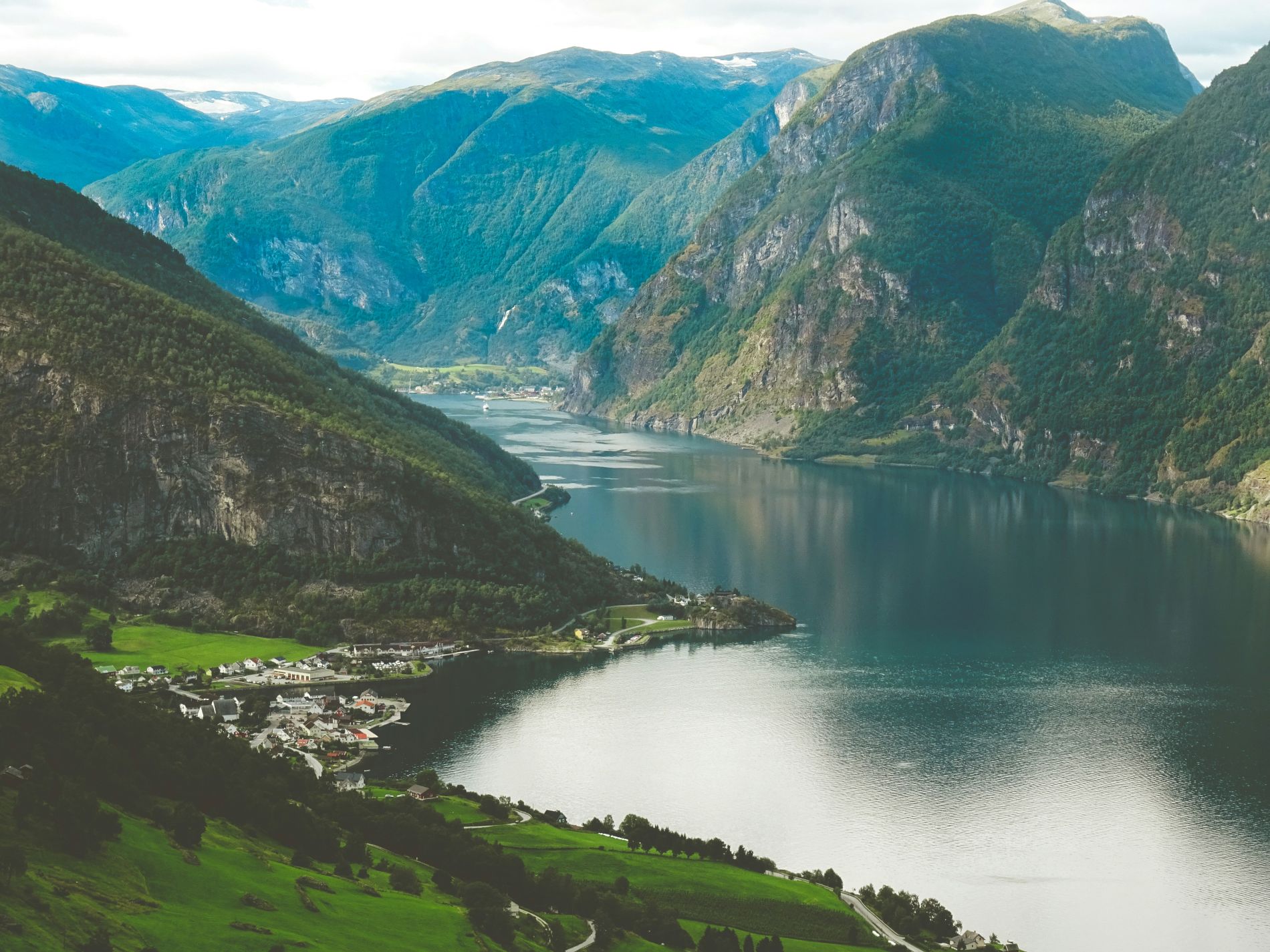
Norway is a long country, and many of its best-known destinations are separated by considerable distances.
A one-week trip works well when it concentrates on one coherent route or region.
For a first visit during the main touring season, the classic southern route connects Oslo with the Bergen Railway, the Flåm and Nærøyfjord corridor, and Bergen.
Lofoten is much farther north and works better as a dedicated summer journey.
Tromsø belongs to a different seasonal pattern again: a multi-night Arctic stay built around the Northern Lights and winter activities.
These are three separate trips rather than variations of one itinerary.
Three ways to spend a week in Norway
Classic southern Norway
- Route
- Oslo → Myrdal → Flåm/Aurland → Nærøyfjord → Bergen
- Main season for this itinerary
- Late spring through early fall
- Transport
- Rail · Flåm Railway · fjord boat · bus
- Principal sights
- Oslo · Bergen Railway · Flåm Railway · Nærøyfjord · Bryggen · Mount Fløyen
Lofoten
- Route
- Svolvær/Kabelvåg → central Lofoten → Reine/Hamnøy → return east
- Season
- Summer
- Transport
- Rental car or carefully planned campervan
- Principal sights
- Henningsvær · beaches of Vestvågøy · Ramberg · Hamnøy · Reine · western Lofoten
Tromsø
- Route
- Tromsø as a multi-night base
- Season
- Northern Lights / dark season
- Transport
- Local transportation and guided excursions
- Principal sights and activities
- Northern Lights · Arctic Cathedral · Fjellheisen · dog sledding · Sámi/reindeer experiences · winter excursions
The transport involved in these three trips is sufficiently different that they are best understood separately.
Itinerary 1
Oslo, the fjords and Bergen
Oslo → Flåm/Aurland → Nærøyfjord → Bergen
- Main season
- Late spring through early fall
- Nights
- Oslo 2 · Flåm/Aurland 1 · Bergen 3
- Transport
- Train · fjord boat · bus
- Car
- Not required
This route follows one of Norway’s principal east–west travel corridors.
It begins with two nights in the capital, crosses the mountains on the Bergen Railway, descends to Aurlandsfjord on the Flåm Railway, continues through UNESCO-listed Nærøyfjord, and ends with three nights in Bergen.
The sequence combines two major cities with the mountain and fjord landscapes of western Norway without requiring a rental car.
Day 1 — Oslo waterfront and historic center
Sleep: Oslo
Start in Bjørvika, where Oslo S, the Opera House and MUNCH are clustered along the eastern waterfront. Walk the Opera House roof, visit MUNCH if it is a priority, then continue west along the harbor toward Akershus Fortress, City Hall and Aker Brygge.
Do not treat every stop as mandatory. If you have less than a full sightseeing day, choose between a substantial museum visit and the longer waterfront walk rather than forcing both into the schedule.
The point of the first day is orientation: modern Bjørvika, the historic fortress and the central harbor can be connected largely on foot without repeatedly crossing the city.
See Oslo’s 20 Main Sights for a ranked overview of the city’s principal sights.
Day 2 — Oslo’s principal museums and Vigeland Park
Sleep: Oslo
Use the second day for the sights that require more deliberate time. The National Museum, one Bygdøy museum and Vigeland Sculpture Park make a realistic framework; trying to clear every museum on Bygdøy usually turns the day into a checklist.
Choose Fram if polar exploration is the priority, or Norsk Folkemuseum if you would rather spend the time on Norwegian buildings, rural history and the Gol Stave Church. The National Museum can anchor a large part of the day for travelers who care about art.
Vigeland works well later in the day because the sculpture park is outdoors and does not need to compete with museum opening hours in the same way.
Compare the city’s principal sights in Oslo’s 20 Main Sights, and review the main base options in Oslo Neighborhoods: Where to Stay and What Each Area Is Like.
Day 3 — Bergen Railway and Flåm Railway
Sleep: Flåm or Aurland
The Bergen Railway crosses the mountains between Oslo and western Norway.
The full Oslo–Bergen journey normally takes approximately 6.5–7.5 hours, but this itinerary leaves the main line at Myrdal.
The railway climbs onto the high plateau of Hardangervidda before reaching Myrdal, where passengers for Flåm transfer to the Flåm Railway.
The Flåm Railway descends from the mountain line to the head of Aurlandsfjord. The approximately one-hour branch journey covers a dramatic change in elevation and is one of the best-known railway sections in Norway.
An overnight in the fjord area divides the Oslo–Bergen journey into two distinct days rather than treating Flåm only as a connection point.
Flåm and Aurland
Flåm is the main transport center.
The Flåm Railway terminates beside the fjord, and scheduled fjord services depart from the waterfront.
Aurland lies several miles farther along Aurlandsfjord. It is a smaller settlement connected to Flåm by local road transport and provides access to the Stegastein viewpoint above the fjord.
See Bergen, Flåm or Aurland: Where Should You Stay? for a fuller comparison.
Stegastein
Stegastein is a projecting viewpoint high above Aurlandsfjord.
Access is by road from Aurland and Flåm. Current shuttle schedules and seasonal access should be checked locally before building it into the day.
Day 4 — Nærøyfjord and Bergen
Sleep: Bergen
The route continues by scheduled boat from the Aurlandsfjord area through Nærøyfjord toward Gudvangen.
Nærøyfjord is one of the narrowest branches of the Sognefjord system and forms part of the West Norwegian Fjords UNESCO World Heritage Site.
Steep mountains rise directly from the water, giving this section a very different scale from the broader fjord around Flåm and Aurland.
From Gudvangen, buses continue through Nærøydalen toward Voss.
At Voss, the journey rejoins the Bergen Railway for the final section to Bergen.
This combination of the Bergen Railway, Flåm Railway, fjord crossing, bus and rail connection forms the classic Norway in a Nutshell route.
After arrival in Bergen, Bryggen, the Fish Market and Bergenhus are all concentrated around the historic harbor and can be seen on an evening walk.
Day 5 — Historic Bergen and Mount Fløyen
Sleep: Bergen
Bryggen is Bergen’s historic Hanseatic wharf and a UNESCO World Heritage Site.
From the late Middle Ages, German merchants of the Hanseatic League used Bergen as an important trading center for dried fish from northern Norway and imported grain and goods from continental Europe.
The wooden buildings visible today preserve the narrow layout of this former commercial quarter.
Bergenhus Fortress stands at the northern end of the harbor. Its principal historic buildings include Håkon’s Hall, a medieval royal hall, and Rosenkrantz Tower.
Fløibanen climbs from the city center to Mount Fløyen.
The upper station provides a clear view of Bergen’s compact position between mountains, harbor and surrounding islands, while walking paths extend into the hills beyond the viewpoint.
Bergen weather
Rain and low cloud are common enough that indoor and outdoor sights are best treated flexibly.
KODE, Bergen’s principal group of art museums, provides a substantial indoor alternative when visibility on the mountains is poor.
Day 6 — A second day in Bergen
Sleep: Bergen
A second full day allows time beyond Bryggen and Mount Fløyen.
KODE holds important collections of Norwegian and international art, including works connected with the development of Norwegian national art in the 19th century.
Troldhaugen, south of the center, was the home of composer Edvard Grieg and now operates as a museum devoted to his life and music.
Closer to the center, Bergen’s wooden streets, Nordnes peninsula and harbor neighborhoods can be explored on foot.
This additional day also gives the itinerary some resilience when rain or low cloud affects outdoor sightseeing earlier in the stay.
Day 7 — Bergen and departure
The final morning can be used for sights missed earlier or for a later departure.
For travelers using an open-jaw airline ticket, Bergen Airport allows the trip to end in western Norway rather than returning to Oslo.
Travelers whose international flight departs from Oslo need to allow for the full rail or air connection back across the country.
Norway in a Nutshell in one day
The Oslo–Myrdal–Flåm–Gudvangen–Voss–Bergen route can also be completed in one long day.
The journey combines the Bergen Railway, Flåm Railway, Nærøyfjord cruise and the road connection through Nærøydalen.
Fjord Tours currently sells the branded Norway in a Nutshell itinerary with trip lengths beginning at one day and allows overnight stops to be added.
The one-day version reduces hotel changes and leaves another night for Oslo or Bergen.
An overnight in Flåm or Aurland instead provides time in the fjord area after the main transport sequence has ended.
Oslo to Bergen without the fjord detour
The simplest version of the route is the direct Bergen Railway from Oslo Central Station to Bergen Station.
The journey normally takes approximately 6.5–7.5 hours and crosses the same high mountain landscape before continuing directly to Bergen.
This version does not include the Flåm Railway or Nærøyfjord.
It is therefore a different itinerary rather than a shortened version of Norway in a Nutshell.
See Oslo to Bergen: Train, Plane or Car? for the full comparison.
When Oslo is part of a larger Scandinavia trip
Oslo is also frequently included in itineraries covering Denmark and Sweden.
Routes such as Copenhagen → Oslo → Stockholm may devote only two or three nights to Norway.
Another option connects Copenhagen and Oslo by overnight passenger ship.
The current Copenhagen–Oslo route is operated by Go Nordic Cruiseline and combines transportation with an overnight at sea.
Check current information with Go Nordic Cruiseline — Copenhagen–Oslo Journey (opens in a new tab).
Itinerary 2
Lofoten in summer
A seven-day road trip across the islands
- Season
- Summer
- Route
- Eastern Lofoten → central islands → Reine/Hamnøy → return east
- Transport
- Rental car or carefully planned campervan
- Base pattern
- Several overnight stops rather than one central base
Lofoten is an Arctic archipelago of steep mountains, fishing villages, beaches and narrow coastal roads.
It lies far north of Oslo and Bergen and normally works as a separate trip rather than an extension of the southern-Norway itinerary.
A week allows enough time to travel gradually from the eastern islands toward Reine and the western end of the archipelago, with time built in for weather.
Visit Lofoten gives the general midnight-sun period as approximately May 28 through July 14, although the exact dates vary by location.
Day 1 — Svolvær and Kabelvåg
Sleep: Svolvær or Kabelvåg
Svolvær is the largest town in Lofoten and the main service and transport center in the eastern islands.
Its harbor is surrounded by steep peaks, including the distinctive Svolværgeita formation.
Nearby Kabelvåg is one of Lofoten’s older fishing settlements and was historically connected with the seasonal cod fishery that shaped much of the archipelago’s economy.
The first night in eastern Lofoten allows the road trip to begin without an immediate long drive west.
Day 2 — Henningsvær and eastern Lofoten
Henningsvær occupies several small islands connected to the main road by bridges.
The village developed around the Lofoten fishery and retains a working harbor alongside galleries, cafés and restored fishing buildings.
The surrounding landscape provides one of the clearest combinations of fishing settlement, sea and mountains in the eastern islands.
Day 3 — Vestvågøy and the beaches
The E10 continues west across Vestvågøy.
Haukland, Uttakleiv and Unstad lie along the island’s outer coast and show another side of Lofoten: broad beaches framed by steep mountains rather than compact fishing villages.
Leknes is the principal service center in central Lofoten, while Ballstad remains an active fishing community and provides another practical overnight area.
Day 4 — Ramberg, Hamnøy and Reine
The road continues through Flakstad and Moskenes toward western Lofoten.
Ramberg is known for its broad white-sand beach.
Hamnøy and Sakrisøy occupy small islands immediately east of Reine, where traditional red fishermen’s cabins stand beneath some of the archipelago’s steepest mountains.
Reine is the principal settlement and visitor base in western Lofoten.
Day 5 — Reine and western Lofoten
Sleep: Reine/Hamnøy area
A second day in western Lofoten allows time for Reine, Å and the surrounding landscape without another accommodation change.
Boat trips, kayaking and hiking are available according to season and weather.
Some of Lofoten’s well-known hikes are steep and exposed, so current trail and weather conditions should be checked locally rather than treated as fixed itinerary items.
Day 6 — Weather day and return east
Weather changes quickly in Lofoten, and a flexible day is useful for activities postponed earlier in the week.
It can also be used to begin the return toward Svolvær or Evenes, depending on the departure route.
Distances are not enormous, but narrow roads, traffic and frequent stops can make driving slower than the map suggests.
Day 7 — Departure
Allow adequate time for the airport, ferry or onward connection.
Departure logistics vary considerably depending on whether the trip ends at Svolvær, Leknes, Bodø or Harstad/Narvik Airport at Evenes.
Campervans in Lofoten
Campervans and motorhomes are common in Lofoten, but the landscape is not an unrestricted parking area.
Drivers must follow parking restrictions, keep designated passing places clear and avoid driving or parking off-road.
Visit Lofoten publishes current guidance on parking, camping and responsible road travel.
Read the official Visit Lofoten essential travel guidance (opens in a new tab) before driving in the islands.
Itinerary 3
Tromsø and the Northern Lights
A multi-night dark-season stay
- Season
- Northern Lights season
- Base
- Tromsø
- Nights
- Approximately 6
- Transport
- Local transportation and guided excursions
Tromsø is one of northern Norway’s principal bases for Northern Lights travel.
The aurora may be visible in the Tromsø region from late August to early April when skies are sufficiently dark and clear.
Cloud cover, weather and auroral activity vary from night to night, so a multi-night stay provides repeated opportunities rather than relying on a single evening.
The city also serves as a base for winter activities in the surrounding region.
Day 1 — Tromsø center
Tromsø grew as a trading and Arctic expedition center and remains the largest city in northern Norway.
The compact center contains Tromsø Cathedral, Storgata and the harbor.
Across Tromsøysundet stands the Arctic Cathedral, whose sharply triangular modern design has become one of the city’s best-known landmarks.
Northern Lights conditions can change throughout the stay, so forecasts and cloud conditions are relevant every evening.
Day 2 — Dog sledding and Northern Lights
Dog-sledding excursions operate from areas outside central Tromsø when winter conditions permit.
Northern Lights tours generally either travel by vehicle in search of clearer skies or operate from fixed camps outside the city lights.
Current operators differ in group size, transportation, clothing, meals and photography assistance, so those details should be checked before booking.
Day 3 — Polar history and Fjellheisen
The Polar Museum documents Tromsø’s long connection with Arctic hunting, trapping and exploration.
Later in the day, Fjellheisen crosses to Storsteinen above the city.
In clear weather, the upper station provides broad views over Tromsøya, surrounding waterways and the mountains beyond.
Day 4 — Reindeer and Sámi experience
Reindeer and Sámi cultural experiences are offered in the Tromsø region during the winter season.
Visit Tromsø advises looking for experiences operated by or developed in cooperation with Sámi hosts.
This day introduces a different part of northern Norway from the city’s polar-exploration history and modern Arctic-tourism infrastructure.
Day 5 — Seasonal winter excursion
The practical options on this day depend on the month and snow conditions.
Common winter activities include snowmobiling, dog sledding and Arctic nature excursions.
Whale watching is significantly more seasonal.
Visit Tromsø currently describes the principal whale-watching period as usually November through the end of January, sometimes extending into early February, with exact timing varying according to where the whales follow the herring.
Day 6 — Flexible weather day
A flexible day gives the itinerary room for an excursion affected by weather earlier in the week.
It can also be used for museums, Fjellheisen in improved visibility or an additional Northern Lights excursion.
This flexibility matters more in Tromsø than on a conventional city itinerary because several of the main experiences depend directly on weather conditions.
Day 7 — Departure
Depart from Tromsø.
Allow adequate time for winter road conditions and airport transportation when arranging the final transfer.
Why these itineraries are separate
Oslo, Bergen, Lofoten and Tromsø occupy very different parts of Norway.
The Oslo–Bergen route crosses southern Norway.
Lofoten lies far north along the coast.
Tromsø lies farther north again.
Domestic flights make it possible to move between these regions, but every additional flight also uses part of a seven-day trip for airport transfers, check-in and onward transportation.
A one-week itinerary therefore becomes substantially more coherent when it concentrates on one of these geographic patterns.
Verify current information before booking
Transport schedules, fjord services, road conditions and seasonal activities change.
Use official sources before committing other reservations to a specific connection or activity.
- Vy — Bergen Line (opens in a new tab)
- Current Bergen Railway schedules and service information.
- Fjord Tours — Norway in a Nutshell (opens in a new tab)
- Current route structure, one-day journeys and overnight extensions.
- Visit Lofoten — Essential travel tips (opens in a new tab)
- Current road, parking and visitor guidance.
- Visit Lofoten — Midnight Sun (opens in a new tab)
- Current seasonal information about the midnight sun.
- Visit Tromsø — Northern Lights (opens in a new tab)
- Current Northern Lights season and viewing information.
- Visit Tromsø — FAQ (opens in a new tab)
- Current whale-watching and seasonal activity information.
- Go Nordic Cruiseline — Copenhagen–Oslo (opens in a new tab)
- Current information on the overnight passenger route between Oslo and Copenhagen.