Fjords
Bergen, Flåm or Aurland: Where Should You Stay?
Bergen, Flåm and Aurland lie along the same broad western-Norway travel corridor, but they are very different places: a historic coastal city, a major rail-and-fjord transport hub, and a smaller village directly on Aurlandsfjord.
Practical Norway · Based in Oslo
Last reviewed: September 2026
Rail, fjord, bus and local shuttle services vary by date and season. Check the exact connections before reserving accommodation.
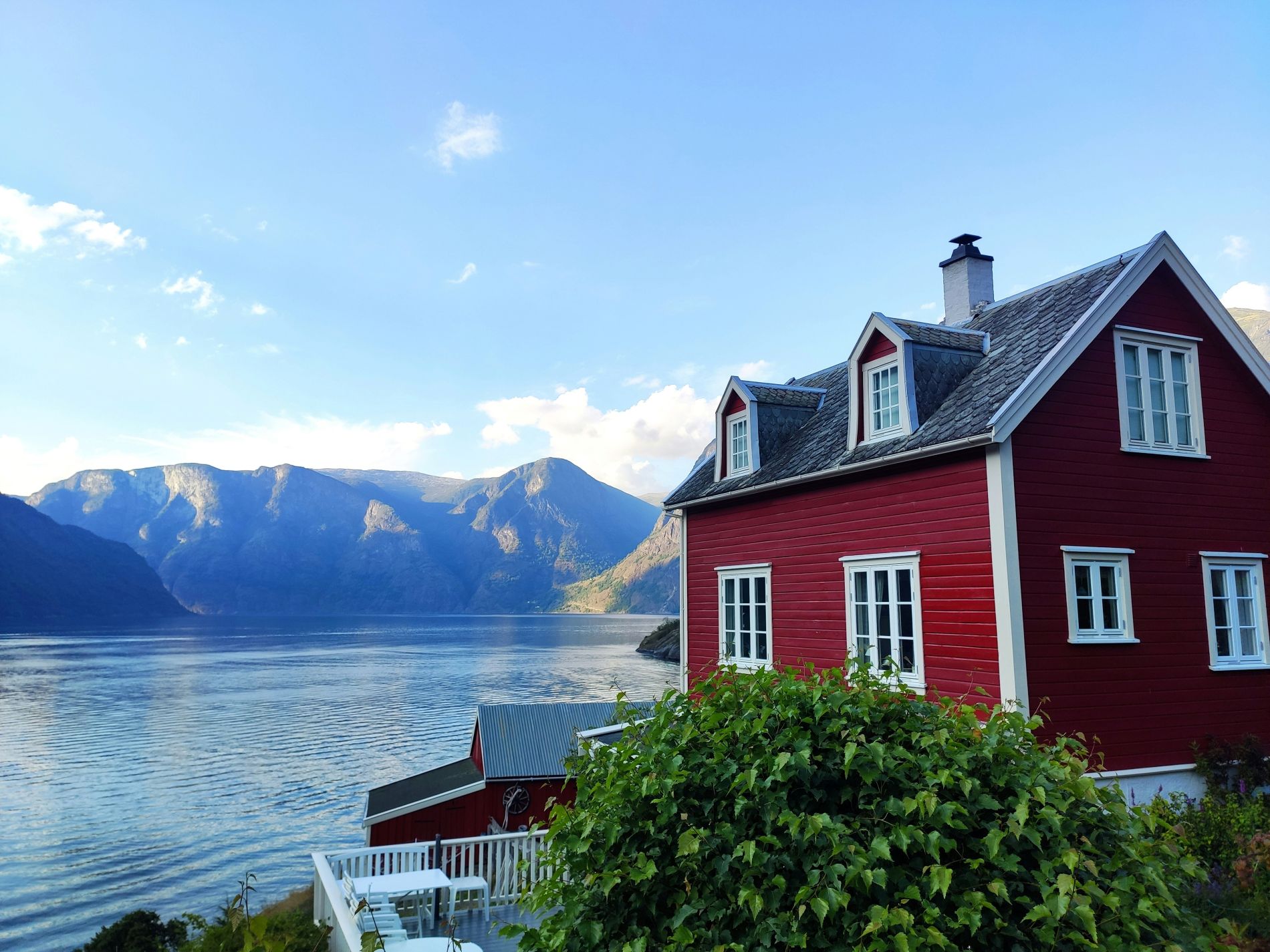
Bergen, Flåm and Aurland are often compared as overnight stops, but they do not perform the same job in an itinerary.
Bergen is a substantial city on Norway’s west coast, with its own historic sights, museums, restaurants, airport, railway station and extensive onward connections.
Flåm is a small village at the head of Aurlandsfjord and one of Norway’s most important visitor transport junctions. The Flåm Railway terminates here, and fjord services connect the area with Nærøyfjord and Gudvangen.
Aurland lies about 10 kilometers from Flåm along Aurlandsfjord. It is smaller and less dominated by the railway terminal, while providing direct access to the fjord and the road toward Stegastein.
The practical difference is therefore not simply city versus village. It is the role each place plays in the journey through western Norway.
The short answer
- Bergen
- Stay in Bergen if you want a real city, the widest choice of restaurants and hotels, and the easiest range of onward connections. It is the best choice when Bergen itself is part of the trip rather than simply the end of the railway.
- Flåm
- Stay in Flåm if the overnight needs to fit directly into the railway-and-fjord route. The train, fjord boats and visitor services meet in one compact place, which makes it the easiest village for tight transport logistics.
- Aurland
- Stay in Aurland if the quieter fjord setting is the reason for staying overnight and you are willing to pay more attention to the next connection. It is close to Flåm, but it is not a rail hub.
Bergen, Flåm and Aurland at a glance
| Bergen | Flåm | Aurland | |
|---|---|---|---|
| Type of place | Historic west-coast city | Small fjord village and transport hub | Small fjord-side village |
| Best for | A city stay with the broadest dining, hotel and onward-transport choices | The easiest overnight inside the railway-and-fjord route | A quieter fjord overnight when setting matters more than rail convenience |
| Rail access | Direct Bergen Railway service | Flåm Railway to Myrdal, connecting with the Bergen Railway | No railway station; local road connection to Flåm and other transport |
| Fjord access | Gateway to several western-Norway fjord excursions, but not directly on the Aurlandsfjord/Nærøyfjord corridor | Directly on Aurlandsfjord; principal departure point for many Nærøyfjord journeys | Directly on Aurlandsfjord; some fjord services call here depending on schedule |
| What is there | Bryggen · Bergenhus · museums · Mount Fløyen · restaurants · urban neighborhoods | Flåm Railway · waterfront · railway museum · fjord departures · visitor services | Aurlandsfjord · village center · Stegastein access · local walks · Aurland Shoe tradition |
| Evening setting | Active city center with substantial dining and cultural choice | Small visitor village after the main transport activity slows | Small residential and fjord-side setting |
| Onward connections | Rail · air · buses · coastal and regional transport | Rail connection via Myrdal · fjord services · road transport | Road and local transport connections; exact services require more schedule checking |
| Main practical difference | A full city destination rather than a transport stop | The simplest place to connect the railway and fjord journey | A quieter base on the same fjord, with more attention required for connections |
Bergen: a city at the western end of the route
Bergen is a destination in its own right, with enough sightseeing, restaurants and city life to justify several nights.
The historic core is organized around Vågen harbor.
Bryggen, the row of narrow wooden buildings along the eastern side of the harbor, preserves the site of the Hanseatic trading quarter. German merchants established an office here in the 14th century and dominated much of Bergen’s international trade for several centuries.
Today Bryggen is a UNESCO World Heritage Site.
Bergenhus Fortress stands at the northern end of the harbor, while the Fløibanen funicular climbs from the city center to Mount Fløyen.
Museums, residential neighborhoods and a substantial restaurant and cultural scene make Bergen more than an overnight transport stop.
It also has the broadest transport connections of the three places: the Bergen Railway terminates in the center, Bergen Airport serves domestic and international flights, and regional transport continues along the west coast and into the surrounding fjord region.
What staying in Bergen changes
A night in Bergen places the traveler at one end of the cross-country rail-and-fjord corridor rather than inside it.
That works naturally when Bergen itself is part of the sightseeing plan.
Two or three nights provide time for Bryggen, Bergenhus, Mount Fløyen and at least some of the city’s museums and neighborhoods without treating Bergen only as the place where the railway ends.
A Bergen overnight does not provide the experience of sleeping directly beside Aurlandsfjord, but it reduces dependence on the limited transport patterns of a small village.
The city forms the western end of the southern route in Norway in 7 Days: Three Realistic Itineraries.
Flåm: the transport center of the fjord corridor
Flåm lies at the inner end of Aurlandsfjord, surrounded by steep mountains and the Flåm Valley.
For travelers, Flåm’s biggest practical advantage is logistics: the railway, fjord boats and visitor services meet in one compact place.
The Flåm Railway links the village with Myrdal on the Bergen Railway.
The line is approximately 20 kilometers long and descends more than 860 meters between the high mountain railway and the fjord. The journey takes about an hour.
At the waterfront, fjord services connect Flåm with Aurlandsfjord, Nærøyfjord and Gudvangen.
This combination makes Flåm the central interchange in the classic Norway in a Nutshell route.
The village itself is compact.
Accommodation, restaurants and visitor services are concentrated near the railway station and waterfront, along with the Flåm Railway Museum.
That convenience is also Flåm’s defining tradeoff: it is a small fjord village built around one of western Norway’s busiest visitor routes.
What staying in Flåm changes
Without an overnight, Flåm can function mainly as a connection between the railway and the fjord.
Sleeping there turns that transfer point into a stop of its own.
An overnight allows the arrival on the Flåm Railway and the departure on the fjord to fall on different days.
It also creates time for the waterfront, the railway museum, local walks or an excursion toward Stegastein without forcing everything into the same transport sequence.
The practical advantage is that most of the principal transport services begin or end close to the center of the village.
The limitation is scale: Flåm remains a small place, and its accommodation and dining choices are correspondingly narrower than Bergen’s.
The rail junction is explained in context in Oslo to Bergen: Train, Plane or Car?.
Aurland: a smaller village on Aurlandsfjord
Aurland lies about 10 kilometers by road from Flåm on the same fjord.
The settlement, often referred to as Aurlandsvangen, sits directly on Aurlandsfjord beneath the road climbing toward Stegastein and the Aurlandsfjellet mountain route.
Unlike Flåm, Aurland does not have a railway terminal.
Aurland is a place to stay for the fjord setting, not for a rail connection.
The village has accommodation, restaurants and local services, as well as the Aurland Shoe tradition.
Some scheduled fjord services call at Aurland, but the exact pattern varies by departure and season.
Road and shuttle connections with Flåm also vary, so the transport plan needs to be checked for the specific date rather than assumed.
Stegastein above Aurland
Stegastein is one of the principal sights associated with Aurland.
The modern viewpoint projects from the mountainside approximately 650 meters above Aurlandsfjord.
Designed by Todd Saunders and Tommie Wilhelmsen, it opened in 2006 as part of Norway’s National Tourist Routes program.
The access road climbs steeply from Aurland and can become heavily trafficked during the main season.
Scheduled sightseeing transport operates from both Flåm and Aurland, but current times should be checked before travel.
What staying in Aurland changes
Aurland places the overnight directly beside the fjord but away from the railway terminus and main visitor interchange in Flåm.
The two villages are close geographically, but that distinction matters when catching a specific train, boat or bus.
Aurland therefore requires more attention to the next day’s connection.
In return, the evening and morning are centered on a smaller village rather than the transportation hub at Flåm.
This is a difference in setting and logistics, not a difference in access to an entirely separate fjord region: Flåm and Aurland sit on the same Aurlandsfjord and are only about 10 kilometers apart by road.
Where Nærøyfjord fits
Neither Flåm nor Aurland is located on Nærøyfjord itself.
Both lie on Aurlandsfjord.
Scheduled cruises from the Flåm area travel along Aurlandsfjord before entering the much narrower Nærøyfjord and continuing toward Gudvangen.
Nærøyfjord forms part of the West Norwegian Fjords UNESCO World Heritage Site together with Geirangerfjord.
The narrow fjord, steep mountain walls and lack of a through road along its shoreline make the boat journey an important part of the route.
Current services between Flåm, Aurland and Gudvangen vary by departure and season.
How the three places fit together
Oslo to Flåm
Oslo → Myrdal on the Bergen Railway
Myrdal → Flåm on the Flåm Railway
This places the traveler directly at the main fjord transport hub.
Flåm to Aurland
Flåm → Aurland by road transport or an applicable scheduled fjord service
The villages are approximately 10 kilometers apart by road.
Current local connections must be checked for the specific date.
Flåm or Aurland to Nærøyfjord
Scheduled fjord services travel along Aurlandsfjord and into Nærøyfjord toward Gudvangen.
Not every departure has the same intermediate stops.
Gudvangen to Bergen
The standard through route continues by road toward Voss and then by Bergen Railway to Bergen.
Exact connections should be verified for the travel date.
Bergen
Bergen is the natural city stop at the western end of the route.
See how this sequence works day by day in Norway in 7 Days: Three Realistic Itineraries.
What an extra night actually adds
A single overnight in the Flåm/Aurland area mainly breaks the cross-country journey into two days.
It creates time between the arrival by railway and the onward fjord journey and allows the evening and morning to be spent beside Aurlandsfjord.
A second night changes the visit more substantially.
It can provide time for Stegastein, walking, another fjord excursion or simply a slower day in the area without building those activities around arrival and departure times.
Bergen works differently because the city contains enough sightseeing for several nights without relying on excursions or transport connections.
Season matters in the fjord area
The Bergen Railway and Flåm Railway operate throughout the year, but the broader visitor experience changes with the season.
Fjord timetables, intermediate boat stops, local buses, sightseeing shuttles and activity schedules can vary considerably.
Winter weather can also affect road and fjord operations at short notice.
Bergen remains a functioning city throughout the year, while Flåm and Aurland are more directly affected by the seasonal rhythm of visitor services.
The exact arrival and departure connection should therefore be checked before accommodation is booked.
Verify current information before booking
Rail, fjord, bus and shuttle services vary by date and season.
Check the transport into the overnight base and the onward connection before reserving accommodation.
- Norway’s Best — Flåm & Aurland (opens in a new tab)
- Current activities, accommodation and local visitor information for Flåm and Aurland.
- Norway’s Best — Flåm Railway (opens in a new tab)
- Current Flåm Railway information and timetables.
- Norway’s Best — Fjord Cruise Nærøyfjord (opens in a new tab)
- Current Flåm–Aurlandsfjord–Nærøyfjord–Gudvangen services and intermediate stops.
- Norway’s Best — Stegastein (opens in a new tab)
- Current access, sightseeing transport and seasonal road information.
- Visit Bergen (opens in a new tab)
- Current Bergen attractions, transportation and visitor information.
- Skyss (opens in a new tab)
- Current local and regional bus information in Vestland.
- Entur (opens in a new tab)
- Current public-transport journey planning across Norway.