Practical Info
Oslo to Bergen: Train, Plane or Car?
The Bergen Railway, domestic flights and several cross-country roads connect Oslo with Bergen. The routes differ substantially in scenery, travel time and how they fit into a larger Norway itinerary.
Practical Norway · Based in Oslo
Last reviewed: September 2026
Train schedules, air service and mountain-road conditions can change. Check current information before booking or driving.
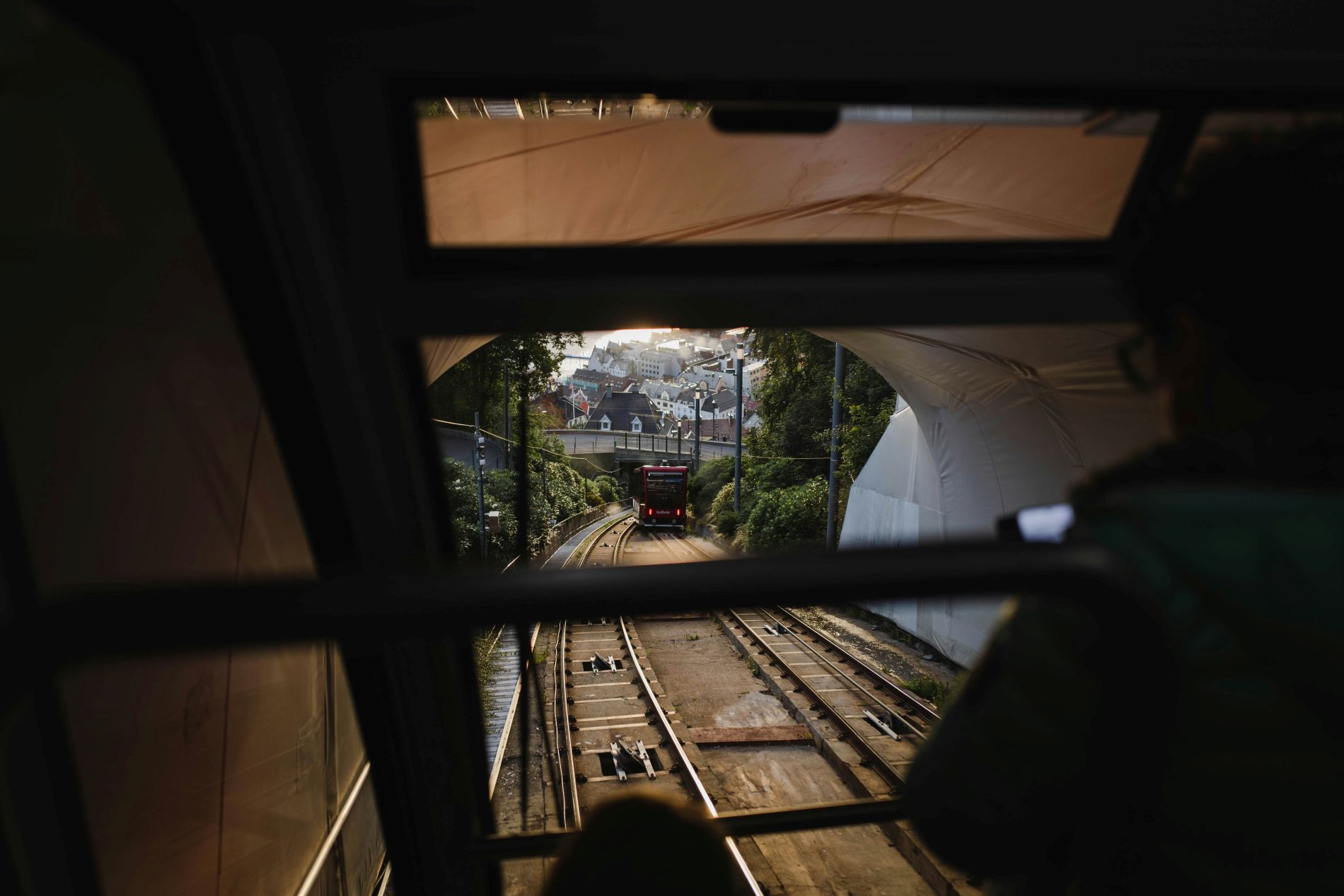
Oslo and Bergen lie on opposite sides of southern Norway, separated by mountains and the high plateau of Hardangervidda.
The direct railway crosses the country from city center to city center. Flying shortens the transportation time but adds airport transfers at both ends. Driving follows one of several mountain corridors and turns the journey into a road trip rather than a simple transfer.
There is also a fourth pattern that causes some confusion: traveling between Oslo and Bergen through Flåm and Nærøyfjord. This uses part of the Bergen Railway but is not the same journey as taking the direct train all the way to Bergen.
The distinctions are straightforward once the routes are separated.
My recommendation
For most first-time visitors, take the train if the journey itself matters. Fly when saving time matters more than scenery. Drive only when the road trip and intermediate stops are part of the itinerary — not simply as a slower way to get from Oslo to Bergen.
The direct train is the default sightseeing choice because it runs city center to city center and makes the mountain crossing part of the trip. Flying is the practical choice when the saved hours matter more. A car earns its place when you intend to stop, stay overnight or explore places that are awkward without one.
How the three main options differ
| Train | Fly | Drive | |
|---|---|---|---|
| Travel pattern | City center to city center | City → airport → flight → airport → city | Cross-country road journey |
| Typical time commitment | About 6.5–7.5 hours on the direct Bergen Line | Short flight, plus airport travel, security and boarding | A full cross-country travel day without substantial stops |
| Scenery | Mountain railway across southern Norway | Limited from the air | Mountain and valley scenery varies with route |
| Main practical advantage | Direct rail journey with no airport transfer | Shortest overall travel time | Freedom to stop between the cities |
| Main practical limitation | Occupies much of the day | Airports are outside both city centers | Longer logistics, road conditions and rental-car responsibilities |
| Fjord connection | Connect at Myrdal for the Flåm Railway | None as part of the journey | Depends on the chosen route and detours |
The Bergen Railway
The Bergen Railway, or Bergensbanen, is the main rail connection between Oslo and Bergen.
Opened in 1909 after roughly 15 years of construction, the line crosses the mountains of southern Norway and reaches its highest point at 1,237 meters above sea level. The route runs for about 471 kilometers and includes more than 180 tunnels.
Trains depart from Oslo Central Station and arrive at Bergen Station, placing both ends of the journey in the center of the city.
The full trip normally takes approximately 6.5–7.5 hours, depending on the service.
West of Geilo, the railway climbs onto the Hardangervidda plateau. Around Finse and the highest section of the line, the landscape becomes open and alpine before the railway descends toward Myrdal, Voss and western Norway.
This mountain crossing is an important part of the journey rather than simply the railway connection between the two cities.
Day trains and night trains
Daytime services provide views of the mountain crossing, including the high plateau around Finse and the descent into western Norway.
Vy also operates overnight service on the Bergen Line.
The night train uses the same route but serves a different practical purpose: it moves the traveler between Oslo and Bergen while using fewer waking hours.
Current overnight accommodation options vary by service and should be checked directly with Vy.
In winter, daylight is considerably shorter, so the amount of scenery visible from a daytime departure depends on the departure time and season.
Myrdal and the Flåm Railway
Myrdal is the junction between the Bergen Railway and the Flåm Railway.
The Flåm Railway descends from the mountain railway to Flåm at the head of Aurlandsfjord.
Travelers continuing directly between Oslo and Bergen remain on the Bergen Railway.
Travelers using the fjord route leave the main line at Myrdal and continue toward Flåm, Nærøyfjord, Gudvangen and Voss before rejoining the rail corridor to Bergen.
This distinction is central to understanding the two routes.
Luggage on the train
Ordinary luggage remains with the traveler on the Bergen Railway and must be carried and stored on board.
Vy publishes current baggage allowances and rules for larger or special items.
Booking the Bergen Railway
Tickets and current departures are available from Vy and through Norway’s national journey planner, Entur.
Availability can become more limited for particular departures, overnight accommodation and busy travel dates.
Railway maintenance can also affect schedules, so the specific departure should be checked before other reservations are built around it.
Flying between Oslo and Bergen
Oslo and Bergen are linked by frequent domestic air service.
The flight itself is short, but comparing only airborne time with the seven-hour railway journey gives an incomplete picture.
Oslo Airport is at Gardermoen, outside central Oslo. Trains connect the airport with Oslo Central Station in about 20 minutes.
Bergen Airport is also outside the city center, with airport bus and light-rail connections into Bergen.
A realistic air journey therefore includes:
- city center → airport
- check-in and security
- boarding and flight
- airport → city center
Flying still reduces total travel time compared with the railway, but the practical difference is smaller than the scheduled flight duration alone suggests.
How flying changes the itinerary
Flying removes the mountain crossing from the travel day and can leave more usable time in Oslo or Bergen.
It can also simplify an itinerary that continues directly to another distant region of Norway, particularly northern Norway.
The tradeoff is that the journey between Oslo and Bergen becomes primarily transportation rather than part of the sightseeing route.
Driving between Oslo and Bergen
Driving between Oslo and Bergen is not a single fixed road journey.
Several routes cross southern Norway, and the practical choice can depend on season, roadwork, weather, mountain-pass conditions and the intermediate places included in the trip.
A direct drive is a substantial travel day.
The main difference from rail or air travel is the ability to stop between the cities and turn the crossing into a multi-day road trip.
Norwegian mountain roads may be affected by:
- weather
- snow
- temporary closures
- roadwork
- convoy driving or other restrictions on exposed routes
Current conditions should be checked with Statens vegvesen before departure.
A transfer or a road trip
A car becomes more significant when the places between Oslo and Bergen are part of the itinerary.
An overnight stop, rural accommodation, mountain area or fjord detour changes the journey from a city-to-city transfer into a road trip.
Travelers driving straight between central Oslo and central Bergen receive the flexibility of a car but also take on parking, tolls, fuel, road conditions and rental logistics.
Road conditions and mountain crossings
Road conditions across southern Norway are not constant throughout the year.
Mountain weather, snow, construction and temporary incidents can change the most practical route.
Statens vegvesen provides live traffic information, mountain-pass status, alerts and road webcams.
Navigation apps are useful for directions, but important mountain crossings should also be checked against the official road information before departure.
The car does not have to start in Oslo
A western-Norway road trip does not necessarily require collecting a rental car in Oslo.
One common structure is to travel west by train or air and begin the driving portion in Bergen or elsewhere in western Norway.
This avoids keeping a car during city stays and separates the cross-country journey from the part of the trip where road access is most useful.
The reverse arrangement can also work for trips ending in Oslo.
The fjord route: Norway in a Nutshell
Norway in a Nutshell is a different way of traveling between Oslo and Bergen.
The classic route combines:
- Bergen Railway
- Oslo → Myrdal
- Flåm Railway
- Myrdal → Flåm
- Fjord journey
- Flåm → Nærøyfjord → Gudvangen
- Bus
- Gudvangen → Voss
- Bergen Railway
- Voss → Bergen
The journey therefore leaves the direct railway at Myrdal, descends to the fjords, and rejoins the main rail corridor at Voss.
Fjord Tours sells the branded Norway in a Nutshell itinerary as a self-guided journey that can begin or end in Oslo or Bergen.
It can be completed in one long day or broken with an overnight stay.
Flåm is the principal transport hub along this route. Aurland provides a smaller alternative base nearby.
This route should not be described simply as “the Oslo–Bergen train.” It is a combined rail, fjord and road journey.
Four versions of the Oslo–Bergen journey
Direct Bergen Railway
Oslo → Bergen
One continuous rail journey between the two city centers.
The mountain crossing is part of the travel day, but Flåm and Nærøyfjord are not included.
Fjord route
Oslo → Myrdal → Flåm → Nærøyfjord → Gudvangen → Voss → Bergen
A combined rail-and-fjord journey.
Can be completed in one long day or divided with an overnight in the fjord area.
Flight
Oslo → Oslo Airport → Bergen Airport → Bergen
The shortest transportation option, with airport transfers required at both ends.
Road trip
Oslo → intermediate stops → Bergen
A flexible overland route whose value comes primarily from the places visited between the two cities.
Why the journey takes time
Oslo and Bergen are separated by the mountain spine of southern Norway.
The railway crosses the high plateau of Hardangervidda before descending into western Norway.
Road routes must also negotiate the mountains through valleys, tunnels and high passes.
The geography explains why the two cities can appear relatively close on a map while the overland journey still occupies much of a day.
Ask a Question
Trying to fit Oslo, the fjords and Bergen together?
If your dates or onward travel make the standard routes difficult to combine, send Practical Norway your itinerary question.
Ask a Question →Verify current information before booking
Train schedules, air service and mountain-road conditions can change. Check the official sources before committing other reservations to a specific departure or route.
- Vy — Bergen Line (opens in a new tab)
- Current Bergen Railway schedules, journey times and service information.
- Vy — Sleeper (opens in a new tab)
- Current night-train accommodation.
- Vy — Luggage on trains (opens in a new tab)
- Current baggage rules.
- Entur (opens in a new tab)
- Current Norwegian public-transport journey planning.
- Statens vegvesen — Traffic information (opens in a new tab)
- Current road conditions, closures, mountain-pass status and webcams.
- Avinor — Oslo Airport (opens in a new tab)
- Current ground transport.
- Avinor — Bergen Airport (opens in a new tab)
- Current ground transport.
- Fjord Tours — Norway in a Nutshell (opens in a new tab)
- Current routing and booking information for the branded itinerary.