Oslo

Oslo's 20 Main Sights

A ranked guide to the sights, museums, historic places, architecture and neighborhoods that matter most on a first visit to Oslo.

Practical Norway · Based in Oslo

Last reviewed: September 2026

Admission, opening hours, exhibitions and access arrangements can change. Current details are linked to the official website for each attraction.

Oslo's principal sights tell much of Norway's story: medieval rule at Akershus, polar exploration at the Fram Museum, national art at the National Museum, traditional life at Norsk Folkemuseum, and the transformation of the waterfront around the Opera House and MUNCH.

The ranking below is intended as a sightseeing priority for a first visit to Oslo. Three stars identify the strongest core sights; two stars mark important additions; one star covers worthwhile museums and attractions when time or interest allows.

The rating reflects sightseeing priority, not the historical or artistic importance of the institution.

Star key

★★★
Defining Oslo sights
★★
Major additional sights
★
Worthwhile with more time or a particular interest

The 20 sights

1★★★

Oslo Opera House

Architecture and performing arts · Bjørvika
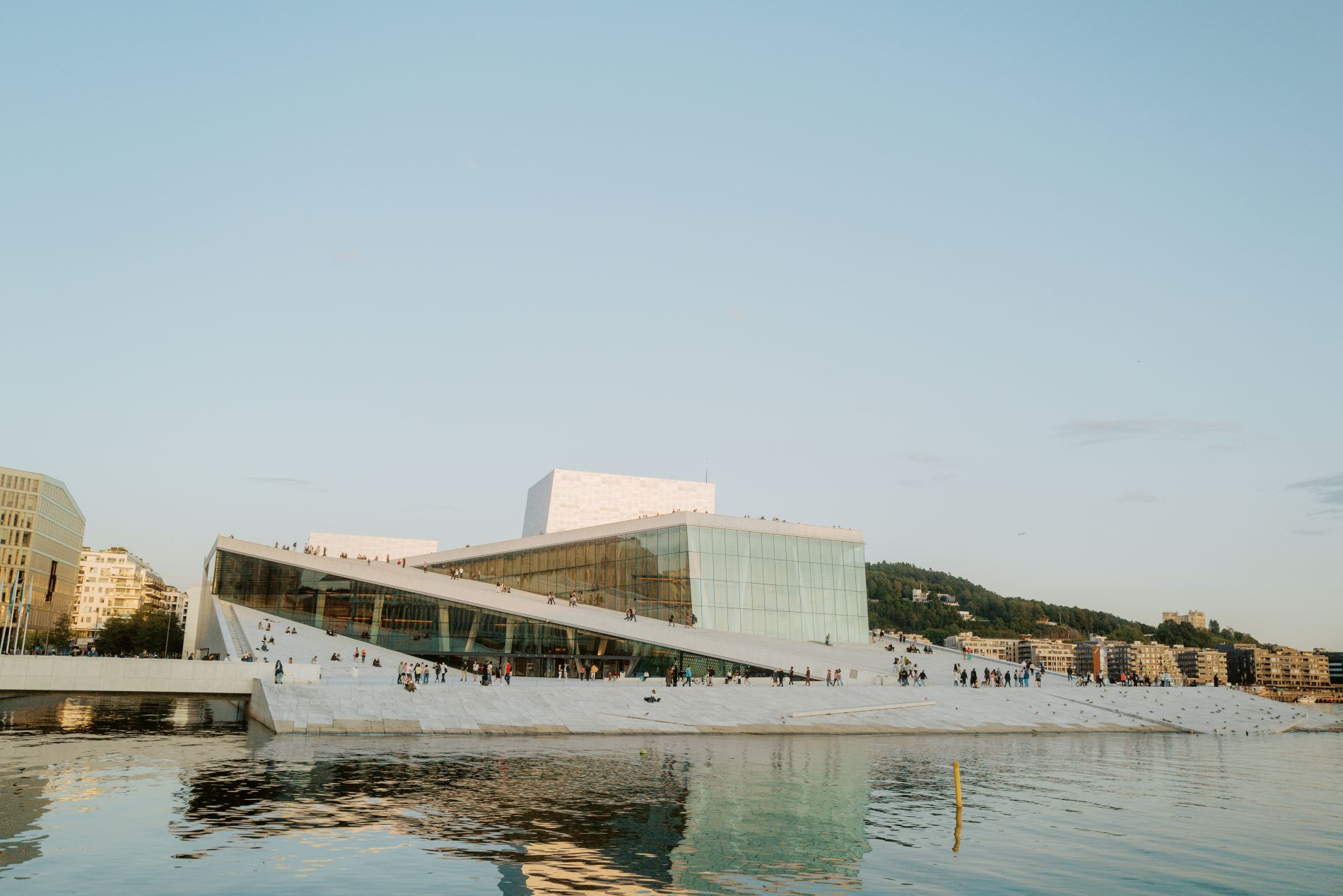
The Oslo Opera House and the Bjørvika waterfront

The Oslo Opera House has become the defining landmark of the modern waterfront. Designed by the Norwegian architecture firm Snøhetta and opened in 2008, the building rises from the harbor with a sloping white-stone roof designed as a public space. Visitors can walk across the roof for views of Bjørvika, the inner Oslofjord and the changing skyline around the central station. The building is home to the Norwegian National Opera & Ballet and helped anchor the transformation of Bjørvika from port and transport infrastructure into a new cultural district.

Visit: Walking the exterior roof and entering the public foyer are free during current access hours. Performances and guided tours require tickets.

Official site →

2★★★

Vigeland Sculpture Park

Sculpture park · Frogner

The Monolith and surrounding sculptures in Vigeland Sculpture Park

The monumental sculpture installation in Frogner Park represents the life's work of Gustav Vigeland. More than 200 sculptures in bronze, granite and cast iron explore birth, childhood, relationships, old age and death. The central axis leads past the Fountain to the Monolith, surrounded by groups of human figures carved in granite.

Visit: Free and open year-round. No ticket is required for the sculpture park. The separate Vigeland Museum nearby has its own admission and opening hours.

Official site →

3★★★

National Museum

Art, architecture and design · City center

National Museum in Oslo

Norway's principal art museum brings together the national collections of painting, sculpture, architecture, design and decorative arts. Norwegian Romantic landscapes provide useful context for the scenery and national identity encountered elsewhere in the country, while the collection also includes major works by Edvard Munch, including the 1893 version of The Scream.

Visit: Paid admission. Check current exhibitions, tickets and opening hours on the museum's official website.

Official site →

4★★★

Royal Palace & Palace Park

Royal residence and city landmark · City center

Royal Palace and Slottsplassen in Oslo

The Royal Palace anchors the western end of Karl Johans gate and is one of the principal landmarks of central Oslo. Completed in the 19th century for King Charles III John, the palace became the main royal residence after Norway entered its union with Sweden and remains the official residence of Norway’s monarch. The broad approach from Karl Johans gate, the palace square and the surrounding park make it an important part of the central city even when the interior is not open to visitors.

Visit: The Palace Park and exterior can be visited without a ticket. Interior access is offered through seasonal guided tours; check the Royal Court’s official website for current arrangements.

Official site →

5★★★

Oslo City Hall

Architecture and civic history · City center

Oslo City Hall seen from the harbor

Oslo City Hall is more interesting inside than its brick exterior suggests. Completed in 1950, the building was decorated by leading Norwegian artists with murals depicting the country's history, working life and civic ideals. The main hall is internationally known as the setting for the Nobel Peace Prize ceremony each December.

Visit: Visitor access is normally free, but City Hall remains a working government building and can close for official events. Check current access before visiting.

Official site →

6★★★

Akershus Fortress

Historic fortress · Waterfront

Akershus Fortress overlooking Oslo's waterfront

Akershus Fortress has guarded Oslo’s harbor since the Middle Ages. The complex began as a royal castle and defensive stronghold and later served military and governmental functions through several periods of Norwegian history. Its walls, gates, historic buildings and elevated position above the harbor provide the clearest surviving connection between modern central Oslo and the medieval city’s defensive history.

Visit: The fortress grounds can be explored independently. Individual buildings and museums within the complex have separate admission and opening arrangements.

Official site (Forsvarsbygg) →

7★★★

MUNCH

Art museum · Bjørvika

MUNCH museum in Bjørvika, Oslo

MUNCH holds the world's largest collection of works by Edvard Munch, Norway's most internationally important modern artist. The collection includes paintings, prints, drawings and photographs spanning his career, alongside changing exhibitions of modern and contemporary art. The tall waterfront museum forms part of Oslo's redeveloped Bjørvika cultural district.

Visit: Paid admission. Check current exhibitions, tickets and opening hours on the official website.

Official site →

8★★

Aker Brygge & Tjuvholmen

Waterfront and contemporary Oslo · City center

Aker Brygge and Tjuvholmen form the western end of Oslo’s central harbor promenade. Aker Brygge was redeveloped from the former shipyard beside City Hall into a pedestrian district of restaurants, shops, offices and apartments. A bridge continues to Tjuvholmen, a newer waterfront development of contemporary architecture, public spaces and the Astrup Fearnley Museum. Together they show the transformation of Oslo’s harbor from working waterfront to one of the city’s principal public spaces.

Visit: The waterfront and public spaces are free and open throughout the day. Restaurants, museums and individual businesses keep their own hours.

VisitOSLO →

9★★

Norsk Folkemuseum

Cultural history · Bygdøy

Gol Stave Church at Norsk Folkemuseum in Oslo

Norsk Folkemuseum is a large open-air museum of Norwegian life and architecture. Historic farmhouses, town buildings and interiors have been relocated here from different parts of the country. Its best-known building is the medieval Gol Stave Church, one of the surviving examples of Norway's distinctive wooden church tradition.

Visit: Paid admission. Programs and access to individual historic buildings vary by season, so current visitor information should be checked before visiting.

Official site →

10★★

Holmenkollen Ski Museum & Jump Tower

Skiing and sport history · Holmenkollen

Holmenkollen ski jump in Oslo

Holmenkollen has been associated with Norwegian skiing and ski jumping for more than a century and is one of the city’s most recognizable landmarks. The modern ski jump rises above western Oslo, while the Ski Museum traces the development of skiing, polar exploration and Norwegian winter-sport culture. The elevated setting also provides broad views over Oslo and the surrounding landscape.

Visit: Paid admission for the museum and jump tower. Check current operating information and visibility conditions on the official website.

Official site →

11★★

Fram Museum

Polar exploration · Bygdøy

The Fram Museum tells the story of Norway’s great period of polar exploration around the original ship Fram. Built to withstand the pressure of Arctic pack ice, Fram was used by Fridtjof Nansen, Otto Sverdrup and Roald Amundsen on expeditions in the Arctic and Antarctic. Visitors can board the vessel. The museum also displays Gjøa, the first ship to complete the Northwest Passage. The Norwegian Maritime Museum and Kon-Tiki Museum are nearby at Bygdøynes, making this the strongest concentration of maritime museums in Oslo.

Visit: Paid admission. Check current tickets and opening hours on the museum's official website.

Official site →

12★★

Ekebergparken

Sculpture park · Ekeberg

Ekebergparken sculpture park overlooking the Oslofjord

Ekebergparken combines an international sculpture collection with woodland paths and broad views over central Oslo and the inner Oslofjord. Works by modern and contemporary artists are installed throughout the hillside, while archaeological and historical remains reflect the area's long settlement history.

Visit: The main sculpture park is free and open year-round. Some exhibitions, installations and programs may have separate access arrangements.

Official site →

13★★

Grünerløkka & Akerselva

Neighborhood and industrial history · Inner east

Grünerløkka grew rapidly during Oslo’s 19th-century industrial expansion, when factories and workshops lined the nearby Akerselva and surrounding apartment blocks housed much of the city’s working population. Today the district combines that industrial inheritance with restaurants, cafés, bars, independent shops and neighborhood parks. The Akerselva walking route passes former mills and factory buildings, while streets around Thorvald Meyers gate, Olaf Ryes plass and Birkelunden show a more residential side of Oslo than the central harbor.

Visit: The neighborhood and river walk are free. Restaurants, markets and individual cultural venues keep their own hours.

VisitOSLO →

14★★

Norway's Resistance Museum

World War II history · Akershus Fortress

Located inside Akershus Fortress, Norway's Resistance Museum documents the German occupation of Norway from 1940 to 1945 and the development of organized resistance. Photographs, documents, newspapers, objects and wartime material explain daily life under occupation as well as military and civilian resistance.

Visit: Paid admission. Check current opening information on the official museum website.

Official site →

15★

Kon-Tiki Museum

Exploration · Bygdøy

The Kon-Tiki Museum covers the expeditions of Norwegian explorer Thor Heyerdahl. Its centerpiece is the original balsa-wood Kon-Tiki raft, used by Heyerdahl and his crew to cross the Pacific from Peru in 1947. The museum also displays Ra II, the reed boat used in a later Atlantic crossing.

Visit: Paid admission. Check current opening hours and tickets on the official website.

Official site →

16★

Nobel Peace Center

Peace Prize history · City Hall Square

The Nobel Peace Center presents the history of the Nobel Peace Prize and exhibitions on its laureates, conflict, human rights and peace-building. Its location beside Oslo City Hall connects it directly with the annual Nobel Peace Prize ceremony held across the square.

Visit: Paid admission. Exhibitions change regularly, so check the current program and ticket information before visiting.

Official site →

17★

Historical Museum

Archaeology and cultural history · City center

The University of Oslo's Historical Museum displays archaeological and ethnographic collections spanning Norwegian prehistory, the Viking Age and the Middle Ages as well as cultures outside Norway. Its Viking exhibitions currently provide the principal opportunity in central Oslo to see original Viking-age objects while the Viking ships remain unavailable.

Visit: Paid admission. Check current exhibitions and opening hours on the official website.

Official site →

18★

Vigeland Museum

Art museum · Frogner

The Vigeland Museum occupies Gustav Vigeland's former studio and residence beside Frogner Park. Sculpture, drawings, plaster models and working studies show how the artist developed the monumental works installed in the neighboring sculpture park.

Visit: The museum is separate from the free sculpture park and has its own admission and opening hours.

Official site →

19★

Astrup Fearnley Museum

Contemporary art · Tjuvholmen

Astrup Fearnley is Oslo's principal private museum of international contemporary art. Its collection and temporary exhibitions occupy a waterfront building designed by Renzo Piano at Tjuvholmen, part of the modern harbor district west of City Hall.

Visit: Paid admission. Exhibitions change regularly; check the current program and tickets on the official website.

Official site →

20★

Natural History Museum & Botanical Garden

Natural history · Tøyen

Giant water lilies at Oslo Botanical Garden

The University of Oslo's Natural History Museum covers zoology, geology, fossils, minerals and the natural environment. The surrounding Botanical Garden contains plant collections from Norway and other parts of the world and forms a large green space at Tøyen.

Visit: The indoor museum has paid admission. The Botanical Garden can be visited separately. Check current opening information on the official website.

Official site →

Need help planning your time in Oslo?

If you have a specific question about your dates, sightseeing time or how Oslo fits into a larger Norway trip, send it to Practical Norway.

Ask a Question